 throlson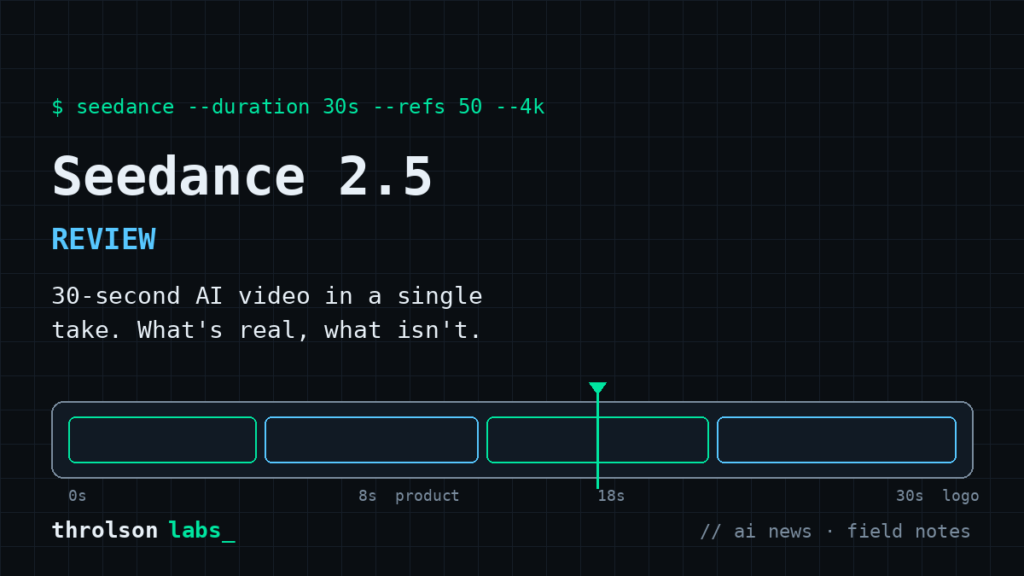
Every AI video model until now has had the same ceiling: five to fifteen seconds per generation, and anything longer meant stitching clips together and praying the lighting matched. ByteDance’s Seedance 2.5, announced at the Volcano Engine FORCE conference in June and rolling out through Dreamina and CapCut over the summer, is the first model built to break that ceiling. Here’s my honest read.
The headline features
- 30-second native video. One continuous generation pass. No stitching, no extension tricks, no seam where clip one becomes clip two. The flagship demo follows a single character through six connected rooms in one 30-second shot.
- Timeline prompts. You script actions to time windows, like a shot list: product reveal at 8 seconds, logo at 26. For anyone making ads, this is the feature that matters most.
- Up to 50 references. Feed it product photos, style frames, camera-movement examples and audio, and it separates “what the product looks like” from “how the camera behaves.”
- Multilingual speech with lip sync and local editing: change one region of a finished video (remove background people, fix an object) without regenerating the whole clip.
The honest caveats
Most of what’s public so far comes from ByteDance’s own curated demos, and vendor demos always show the best take, never the retry count. Availability has also been messy. The model hit Volcengine’s enterprise API in mid-July, but consumer access through Dreamina rolled out unevenly, and some platforms listed it as “coming soon” weeks after the announcement. Pricing per usable output, failure rates, and queue times are still question marks. Treat the demos as a ceiling, not an average.
What it means for small-business ads
A 30-second single-take generation with timed beats is functionally a TV commercial format. If real-world results hold up anywhere near the demos, the cost of a decent :30 spot drops from “hire a production company” to “an afternoon and a subscription.” The workflow I’m testing toward: product stills into a reference set, a timeline prompt written like a shot list, then local edits to fix the one thing that’s off instead of rerolling everything.
My advice mirrors what I do myself: keep shipping with the tools that work today, and test new models against a real brief (your product, your offer, your logo) the day you get access. A model that nails someone else’s demo and fumbles your product shot is worth nothing to you.
Judge AI video on cost per usable output, not cost per generation. One expensive take that ships beats ten cheap ones that don’t.
The verdict
Promising is the right word. Genuinely new capabilities, not yet independently proven at production scale. Seedance 2.5 is the strongest signal yet that AI video is moving from clip generator to production system. I’ll publish results from my own tests here once I’ve run it against real ad briefs. Want video ads produced for your business while the models fight it out? That’s what we’re here for.
— Nick